
Cost-Effective Path to High Performance Homes
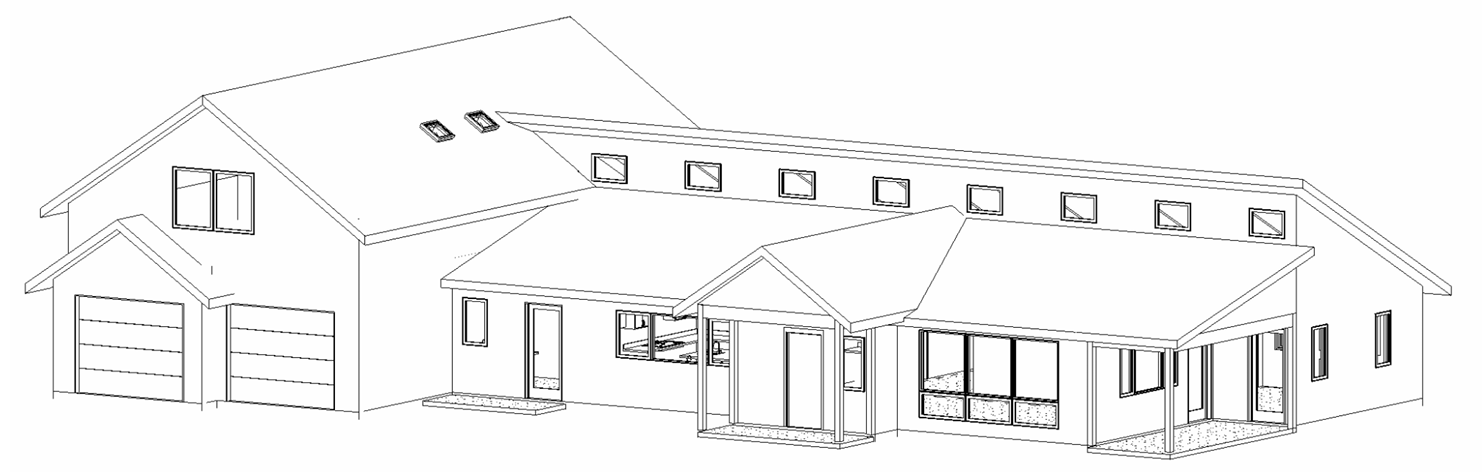
New analysis shows strategic optimization can reduce premium construction costs by up to 8% while maintaining superior energy efficiency.
xStar Research today released a comprehensive case study analyzing the Canyon View Home originally built in 2016, demonstrating that cost-effective, high-performance construction is achievable through strategic optimization of material choices and structural systems.
The Canyon View Home, a 1,974 square foot residence located in Northern New Mexico's high desert, was originally designed to far exceed energy code requirements with R-41 structural insulated panel (SIP) walls and roof, triple-pane windows, and R-20 insulated concrete form (ICF) foundation walls. Using xStar's building performance analysis software and a detailed Revit model, researchers assessed whether this exceptional design could be replicated cost-effectively in 2025.
High-Performance Designs Have Enduring Value
The study confirmed that the original design remains fully compliant with current 2021 International Energy Conservation Code (IECC) standards and performs approximately 23% better than code minimum requirements. The design delivers substantial energy savings, reducing heating and cooling loads by approximately 24 MBtu per year compared to code minimum construction.
"This analysis demonstrates the enduring value of thoughtful, high-performance design," said Talia Dreicer, former Sustainable Architecture Consultant at xStar Research. "The Canyon View Home continues to exceed current energy codes nearly a decade after its original design, while offering significant environmental benefits."
The study quantified annual carbon emission reductions of 1.42-2.36 US tons of CO2e, which is equivalent to 3,280-5,452 miles not driven in a standard gasoline-powered vehicle. The enhanced airtightness achieved through high-performance construction also provides benefits for occupant comfort and building durability.
Replicating the original specification today would cost an estimated $182,000 (31%) more than a code-compliant equivalent. However, the study's primary focus was demonstrating how strategic optimization can substantially reduce these premium costs while maintaining exceptional performance.
Strategic Optimization Achieves Significant Cost Reduction
The case study demonstrates xSar's ability to rapidly generate and analyze design alternatives that reduce costs while maintaining high energy performance. Researchers created two optimized versions of the Canyon View Home:
- Alternative Design #1 achieved a $30,000 (4%) cost reduction through strategic material and finish substitutions, including switching from stucco to fiber cement siding, adjusting ceiling materials, and selecting alternative insulation products for the foundation. Energy performance remained virtually identical to the original design.
- Alternative Design #2 delivered $59,000 in total savings (8% reduction) while still performing 21% better than code requirements. This design explored an alternative wall system using stick-framed construction with R-23 rockwool batt insulation and R-19 polyisocyanurate continuous insulation, demonstrating that multiple construction approaches can achieve high performance.
"These results show that high-performance construction can be optimized for better cost-effectiveness without sacrificing energy efficiency," said Fenrich. "The optimal construction approach depends on a variety of factors including builder expertise, regional material costs, and specific project requirements. What's important is having the tools to evaluate these options quickly."
Supporting Sustainable Building Design
As building codes continue to evolve toward greater energy efficiency and sustainability becomes increasingly important, the study's findings offer valuable insights for architects, builders, and homeowners seeking to optimize the balance between performance, cost, and environmental impact.
The xStar software, which integrates with AutodeskⓇ RevitⓇ, enables fast comparative analysis of building designs, providing cost estimates, energy performance metrics, and IECC code compliance data in a single platform. This capability allows design teams to make informed decisions both earlier in and throughout the design process.
The case study also validated xStar's analytical capabilities against real-world data. When compared with inflation-adjusted figures from the original 2016 construction, xStar's 2025 estimates showed strong agreement, with cost estimates within 3-19% and energy load calculations within 5% on average.
"Our goal is to make high-performance, sustainable building design more accessible by providing the analysis tools needed to optimize designs efficiently," Fenrich added. "The Canyon View Home case study demonstrates how thoughtful optimization can make superior energy performance more attainable."
The complete Canyon View Home case study, including detailed methodology, technical specifications, and design alternatives, is available on the xStar Research website.
About xStar Research xStar Research develops advanced building performance analysis software that helps architects, builders, and developers optimize residential designs for cost, energy efficiency, and code compliance. The company's AutodeskⓇ RevitⓇ plugin streamlines the design process by providing integrated cost estimation and energy analysis directly within industry-standard BIM workflows.
For more information about xStar Research and xStar, visit www.xstarresearch.com.